
How to Search El Paso County Court Records
Colorado runs an open docket search but keeps court files off the public web. The Colorado Judicial Branch Docket Search is the main free tool for El Paso County. It returns court events, parties, attorneys, case numbers, and hearing dates. It does not return PDF copies of complaints, decrees, or sentence orders. For those, use the online Record/Document Request Form, mail the El Paso County PDF request to the Research Department, or visit Room S101 at the courthouse.
Have a few facts ready before you start. A case number, a party name with date of birth, or an attorney bar number speeds the search. The state form warns that at least one filter beyond the date is required, and broad queries can hit the 5,000-result cap. Case numbers use a 4-digit year, a class letter, and a sequence number, like 26CR2237 or 25M7765.
The official El Paso County landing page lays out the same workflow with local contacts. A view of the page helps when you are matching links to tools.
The El Paso County landing page on the state judicial site lists the courthouse, hours, and quick links to records and dockets at coloradojudicial.gov.
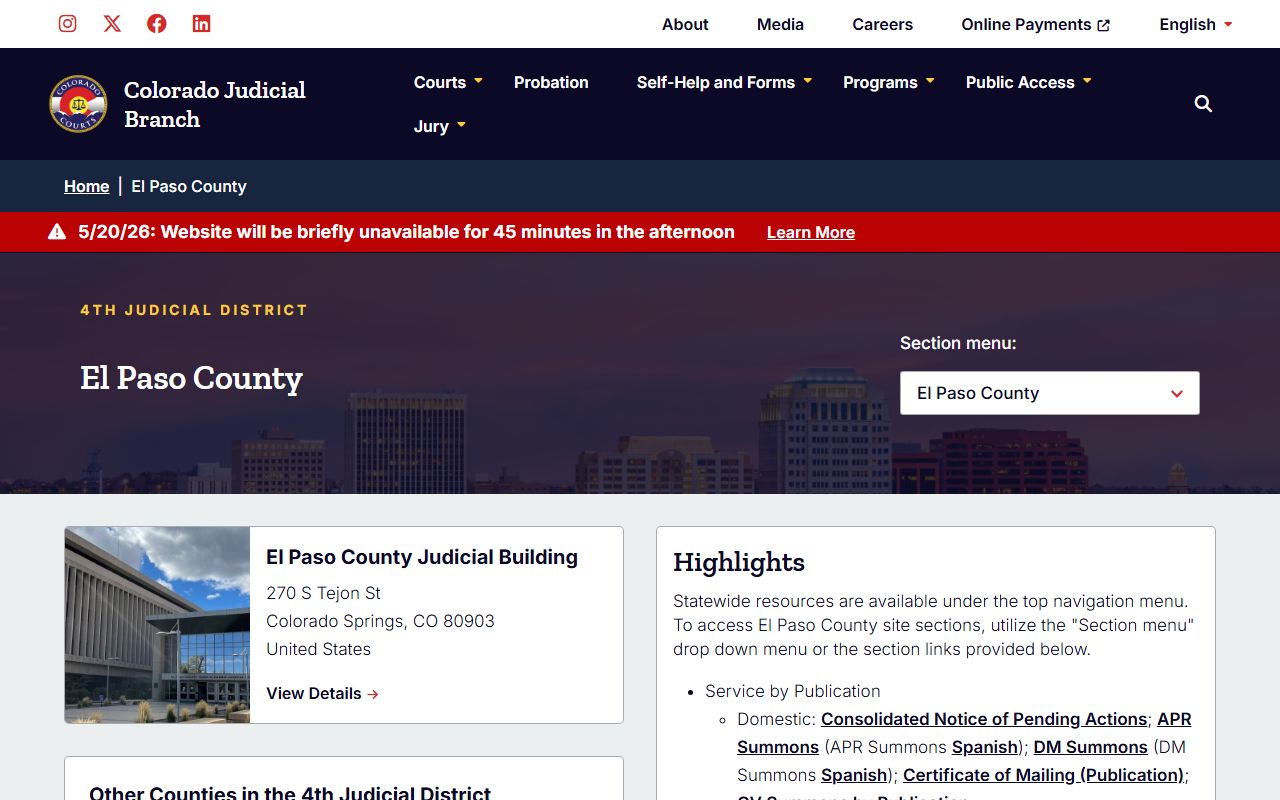
The landing page is the fastest path to the docket, the record request form, the self-help center, and the El Paso County Combined Court PDF request. It also flags current notices, like the 2026 third-Wednesday early closures.
- Open the state docket search and confirm El Paso County is selected.
- Pick Court Type. Use Both if you are not sure whether the case sits in District or County Court.
- Choose a date range or enter a specific date from the summons.
- Add a case number, a party name, or an attorney filter so the search returns under the 5,000 cap.
- Open the docket entry to see hearings, divisions, and attorneys.
- For copies or certified documents, submit the online record request and wait for the Notice of Fees.
The El Paso County Judicial System
The 4th Judicial District covers El Paso and Teller Counties. Most state court work in El Paso County happens at the El Paso County Judicial Building. The District Court hears felonies, large civil cases, divorce, juvenile, probate, and water matters. The County Court hears misdemeanors, traffic, small claims, civil cases under the statutory cap, and protection orders. Municipal courts like the Colorado Springs Municipal Court are separate and handle city ordinance cases. The state appellate courts sit in Denver.
The 4th Judicial District Attorney prosecutes felonies and many misdemeanors for both counties. The Colorado State Public Defender keeps a regional office in Colorado Springs at the coloradodefenders.us site. The Colorado Springs federal courthouse is part of the U.S. District Court for the District of Colorado, not the state system.
Case flow: County Court › District Court › Colorado Court of Appeals › Colorado Supreme Court
| Court | Jurisdiction | Case Types |
|---|---|---|
| Colorado Supreme Court | Top state court | Discretionary review, attorney rules, original proceedings |
| Colorado Court of Appeals | Mid-level state appeal | Most appeals from district court |
| El Paso County District Court | General jurisdiction | Felony, large civil, divorce, juvenile, probate, mental health |
| El Paso County Court | Limited jurisdiction | Misdemeanor, traffic, small claims, civil under cap, protection orders |
| Colorado Springs Municipal Court | City ordinance | Parking, photo enforcement, city code violations |
The same building hosts the Self-Help Center, Collections, Court Care, and the Probate Division. Court Care is free childcare for parents doing court business. Same-day civil protection orders must be filed in Room S101 between 7:30 a.m. and 9:30 a.m.; later filings get heard the next business day.
Court Records vs Clerk & Recorder Records
Two different El Paso County offices both use the word "clerk," and people mix them up. The Clerk of Court at 270 S Tejon St keeps state case files: criminal cases, divorces, civil suits, small claims, probate, and traffic. The El Paso County Clerk & Recorder, currently Steve Schleiker, runs a separate elected office at 1675 W Garden of the Gods Road. That office records deeds, plats, and DD-214 forms, issues marriage and civil union licenses, and runs elections and motor vehicle services.
The county page that lists elected offices spells out the split.
The county elected officials page at elpasoco.com describes the Clerk & Recorder, the Sheriff, and other county officials in plain terms.
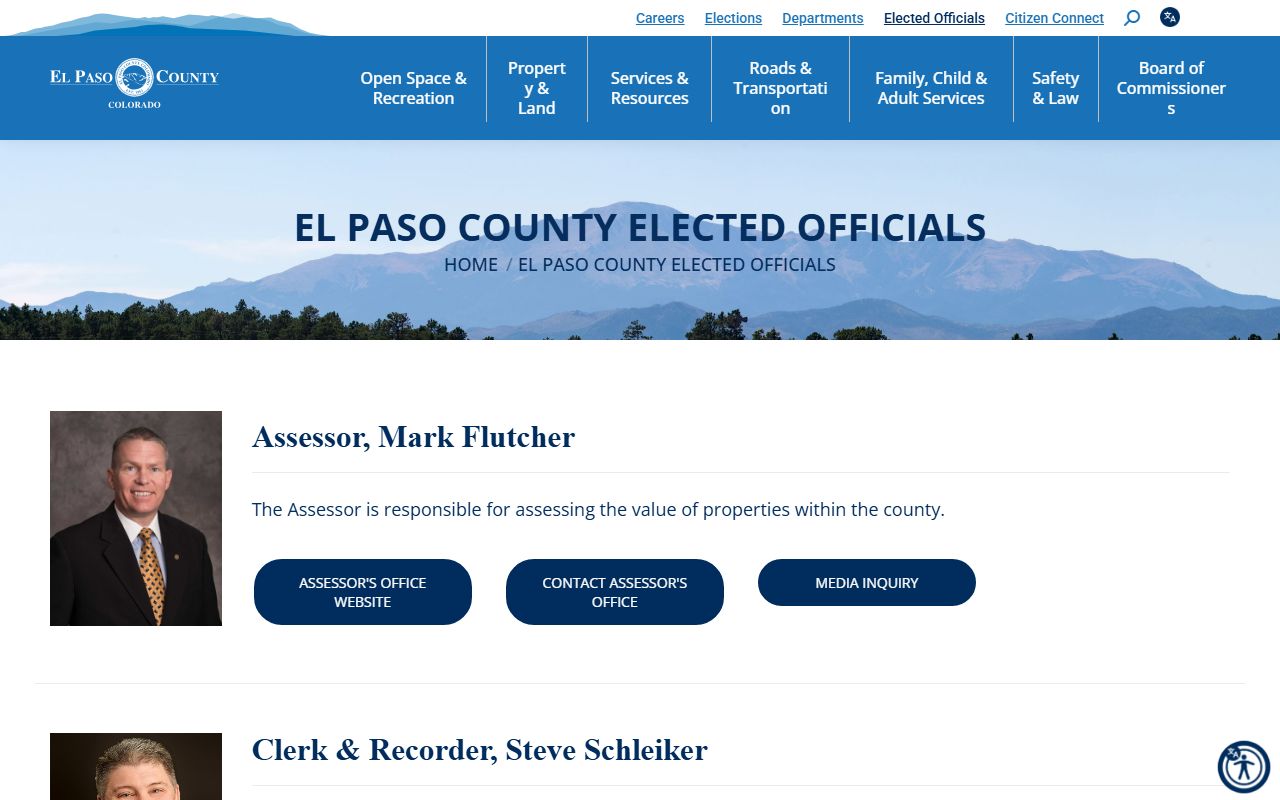
The page is helpful when a visitor is not sure which office holds a record. Most divorce, criminal, and civil questions route to the Judicial Building. Marriage and recording questions route to the Clerk & Recorder. The El Paso County public records page covers the recorded-document side in more depth.
| Record | Where to start |
|---|---|
| Court case files, dockets, hearings | Colorado Judicial Branch and the Clerk of Court at 270 S Tejon St |
| Divorce decrees and family case orders | 4th Judicial District record request form |
| Marriage and civil union licenses | Clerk & Recorder Recording Department |
| Deeds, plats, recorded documents | Clerk & Recorder public records portal |
| Inmate booking and warrants on file | El Paso County Sheriff |
| Background check / criminal history | Colorado Bureau of Investigation |
Types of El Paso County Court Records
El Paso County court files cover the full sweep of state trial work. The case class letters seen in the Colorado docket search are C, CR, CV, CW, DR, JD, JV, M, PR, R, S, and T. Each letter ties to a kind of case. The class letter, the year, and the sequence number form the case number you see on dockets and orders.
Some files are public and some are not. Public access for court files runs through Chief Justice Directive 05-01 and Colorado court rules, not just the open records act. Juvenile and adoption matters are mostly closed. Sealed adult convictions are out of public view but still visible to courts and law enforcement.
- Criminal records - felony (CR) and misdemeanor (M) cases. See El Paso County criminal records for charges, dispositions, and sealing rules.
- Civil records - large civil suits (CV), small claims (S), and county civil (C). Orders, judgments, and protection orders show up here.
- Family records - divorce, parenting plans, support, and separation, grouped under DR. Decrees are requestable through the state form.
- Probate records - wills, letters, trusts, claims, and protective proceedings, under PR. Walk-up hours run on Wednesdays.
- Traffic records - speeding, DUI, DWAI, and other moving violations, class T or M. The County Court handles most traffic dockets.
- Juvenile records - delinquency (JD) and dependency (JV) cases, restricted by Colorado Title 19.
Searches that cross class lines, such as looking for any case with a person's name, are best done by party name on the docket search. Searches for one specific document use the record request form. The two tools do different jobs.
What El Paso County Court Records Show
A docket entry is short. It lists the case number, the court, the division, the parties, the hearing date, and the most recent event. A full case file is much larger. It can hold motions, orders, sentencing forms, victim notices, exhibits, and protection orders. The official Record/Document Request Form groups documents under Family Matters, Criminal Matters, Civil Matters, Probate, and Other.
The list below shows the core fields the docket search and request form expose. A user who knows even one or two of these fields can usually find the right case.
| Field | What It Shows |
|---|---|
| Case Number | Year + class letter + sequence, like 26CR2237 or 23T0814 |
| Filing Date | Date the case opened with the Clerk of Court |
| Parties | People of the State of Colorado, named defendants, plaintiffs, petitioners |
| Charges or Cause | Statute citation and offense, or civil claim heading |
| Court / Division | District or County, plus a numbered division like Division 25 |
| Hearing Date | Next scheduled appearance and courtroom |
| Disposition | Pending, plea, dismissed, sentenced, deferred, sealed |
| Sentence / Judgment | Fine, costs, jail, probation, or money judgment |
| Protection Order | Flag if a no-contact order is on the case |
The state online request form is built around these same fields. A look at the form helps when you are gathering documents to file with the court.
The Colorado Judicial online record request form, with document categories and fees, lives at coloradojudicial.gov/recorddocument-request-form.
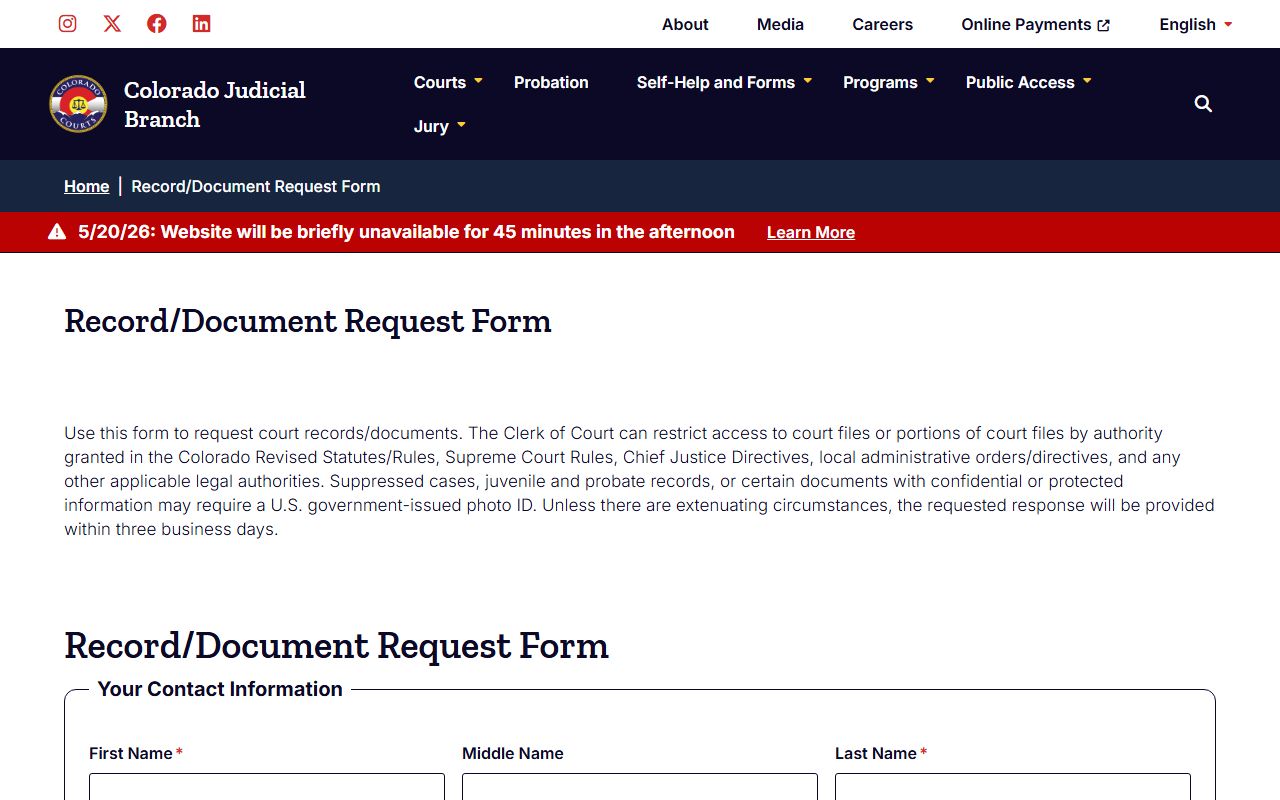
The form asks for requestor contact info, case number, case type, filing year, county, date of birth, and party information. It also lists fees and lets you ask for certified copies and a register of action.
El Paso County Docket Search Fields
The state docket search exposes more filters than most county portals. Used well, it narrows a search from thousands of results to one. The table lists the public fields, their type, and whether each is required.
| Field | Type | Required | Notes |
|---|---|---|---|
| Judicial District | Dropdown | One filter beyond date | 4th for El Paso |
| County | Dropdown | Optional | El Paso, code 21 |
| Courthouse | Dropdown | Optional | El Paso County Judicial Building |
| Court Type | Radio | Optional | Both, County, District |
| Date Range | Dropdown | Yes | Today, 1 Week, 1 Month, 3 Months, 6 Months, Specific Date |
| 4-Digit Year | Text | Optional | Case number year |
| Case Class | Dropdown | Optional | C, CR, CV, CW, DR, JD, JV, M, PR, R, S, T |
| Case Sequence | Text | Optional | Numeric part of case number |
| Party Search | Radio | Optional | Individual or Business |
| First Name / Last Name | Text | Optional | Individual party search |
| Business Name | Text | Optional | Business party search |
| Attorney Search | Radio | Optional | Name or Bar Number |
The form prints two helpful notices. One says at least one filter in addition to date is required. The other warns that searches over 5,000 results must be refined. Treat both as guardrails. A party name plus a one-week date range is usually enough for hearing confirmation.
Public Access Laws for El Paso County Court Records
Colorado splits public records into three regimes. The Colorado Open Records Act covers general government records. The Colorado Criminal Justice Records Act covers sheriff and police records. Court records sit under Chief Justice Directive 05-01 and Colorado court rules. The right form, fee, and timeline depend on which law applies. Court files use the judicial request form; sheriff reports use the EPSO records page; county administrative records use the county CORA process.
Statutes that come up most often when people search El Paso County court records are listed below. Each cites the section, links to the official state legislature page where possible, and adds a plain English line.
Key Statutes:
C.R.S. § 24-72-201 et seq. - The Colorado Open Records Act sets the default that public records can be inspected, subject to listed exceptions.
C.R.S. § 24-72-205 - The CORA copy and research fee rule; the state max hourly rate was raised to $41.37 per hour effective July 1, 2024.
C.R.S. § 24-72-301 et seq. - The Colorado Criminal Justice Records Act covers sheriff reports, body camera footage, and other criminal justice records.
C.R.S. § 19-1-304 - Title 19 limits public access to juvenile probation and law enforcement records.
CJD 05-01 - The Chief Justice Directive that governs access to Colorado court records and the basis for the judicial branch request form.
The state judicial branch has an access guide that translates these rules for the public. It is worth a look before you file a request.
The Access Guide to Public Records at coloradojudicial.gov/access-guide-public-records explains why trial court documents are not posted online and how to request copies.
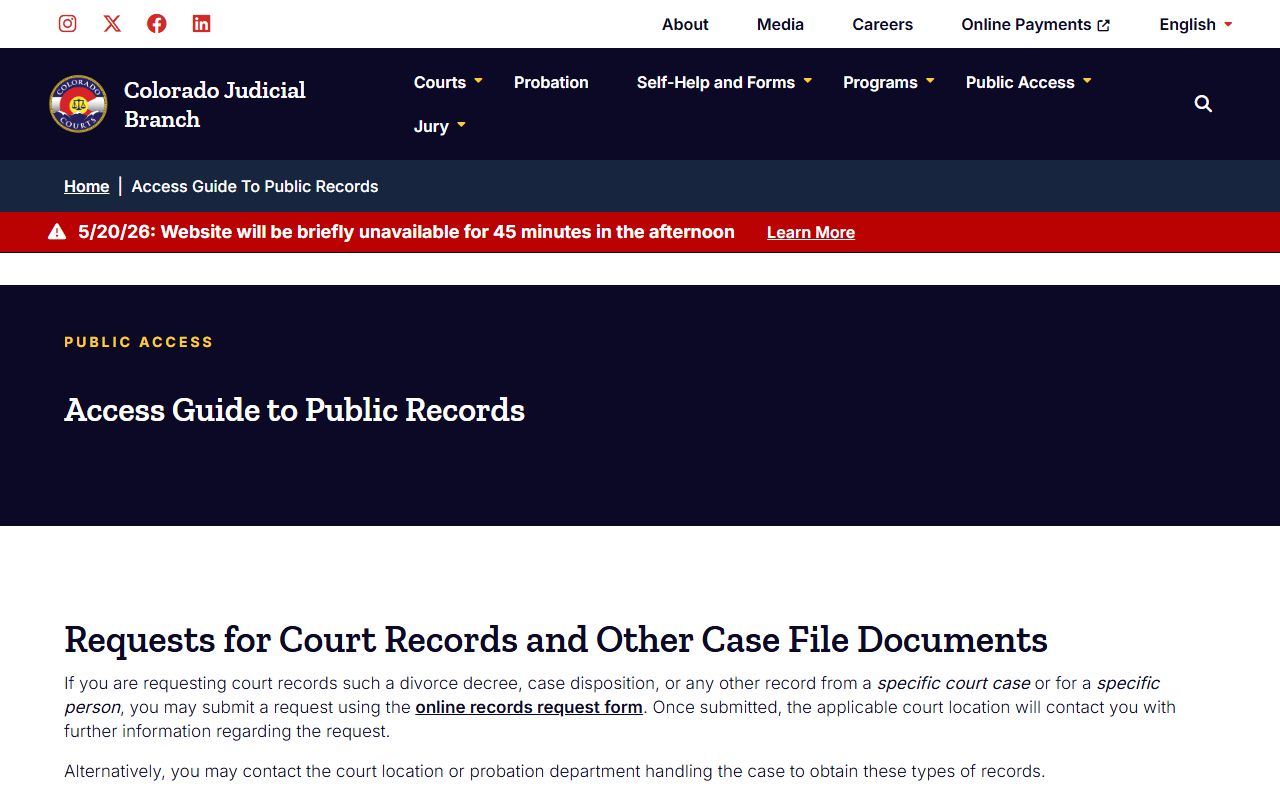
The guide is short, but it sets the rules a clerk will apply when you walk up to Room S101 or submit the online request form. It also flags when a fee waiver is possible.
Records That Are Restricted or Confidential
Not every El Paso County court record is public. Juvenile delinquency and dependency files, adoption files, mental health commitments, and many protective proceedings are closed by statute. Sealed adult convictions are out of public view, though courts, prosecutors, and agencies that run background checks can still see them. Records with Social Security numbers, financial account numbers, victim addresses, and protected personal data get redacted before release.
Sealing and expungement are not the same thing. Adult sealing under C.R.S. § 24-72-706 limits access but does not destroy the file. Juvenile expungement under Title 19 is broader and was widened by HB17-1204 and HB19-1335. The state runs a sealed case search where a defendant can confirm whether automatic sealing has applied to a qualifying conviction. That tool is for defendants only, not for general background searches.
If you are blocked from a record, ask the clerk which rule applies. Some files require a court order or a U.S. government photo ID. Suppressed cases may not be public at all. An attorney can sometimes get access that the general public cannot.
Specialty Courts in El Paso County
The 4th Judicial District has a long history of problem-solving courts. The original Drug Court started in 1999 as one of the first in Colorado, and the El Paso County DUI Court began in June 2008. The current Recovery Court runs two tracks for high-risk defendants whose addiction drives their criminal conduct. Recovery Court professionals screen candidates after plea and before sentencing, or when probation revocation is on the table.
DUI Court sits inside the same district. It uses intensive supervision, treatment, and frequent court review for repeat impaired-driving defendants instead of a basic fine-and-jail outcome. Both courts are sentencing options for the District Court, not separate courthouses. Hearings happen at 270 S Tejon St.
Other problem-solving programs may run from time to time. The judicial branch problem-solving courts page is the safest spot to check current programs. Avoid relying on dated news articles for staffing or eligibility.
El Paso County Sheriff and Jail Information
The El Paso County Sheriff's Office was created in 1861. The current Sheriff is Joseph Roybal, the 29th sheriff of the county. EPSO has 543 sworn deputies and more than 300 professional staff. The Office of the Sheriff sits at 27 East Vermijo Ave, and the main jail, the Criminal Justice Center, sits at 2739 East Las Vegas St in Colorado Springs.
The EPSO public inmate search lets a user query by Last Name or Booking Number. The search returns booking number, name fields, year of birth, physical descriptors, location, charges, court dates, bond, holds, and warrants. EPSO warns that mobile results may be off and that no one should take official action without calling the booking desk at 719-390-2151. See El Paso County inmate records for full roster details, released inmates for VINE and CDOC tools, jail population for capacity data, and warrant records for the warrant workflow.
Booking, mail, funds, visitation, and property rules are detailed and worth reading before a visit. The official inmate services page covers them well.
Marriage, Divorce, and Probate Records
Marriage and civil union licenses come from the Clerk & Recorder Recording Department. The fee is $30, cash or card. The license is valid on issue and must be used in Colorado within 35 days. Self-solemnization is allowed under C.R.S. 14-2-109. Divorces, on the other hand, are court records. They live in the 4th Judicial District file room, not the Clerk & Recorder office. See the marriage and divorce records page for the full process. Probate runs through the District Court Probate Division, with walk-up Wednesday hours; the probate records page covers wills, letters, and protective proceedings.
Some of the same terms come up in all three areas. A short glossary helps.
- Testator
- The person who made the will.
- Executor
- The person named in a will to handle the estate; called personal representative in Colorado practice.
- Intestate
- Dying without a valid will, which sends the estate through statutory rules.
- Conservator
- A person the court appoints to manage another adult's money or property.
- Guardian
- A person the court appoints to make personal or care decisions for another.
- Solemnization
- The act that makes a marriage legal under Colorado law.
El Paso County Court Records Fees
The Colorado Judicial record request form sets the court fee schedule. Sheriff record fees follow a separate table. Marriage copy fees come from the Clerk & Recorder. The table groups the most common items so a user can plan a request.
| Item | Amount |
|---|---|
| Court copy per page | $0.25 |
| Court certified or exemplified copy | $20.00 per document |
| Court name search | $5.00 |
| Court research / redaction after first hour | $30.00 per hour, 15-minute increments |
| Transcript of judgment | $25.00 |
| Certificate of satisfaction | $20.00 |
| Marriage license | $30.00 |
| Certified marriage copy | $1.00 |
| Sheriff report up to 10 pages | $8.00 |
| Sheriff report 11+ pages | $8.00 plus $0.25 per page |
Parties and their attorneys cap at $15 per case for plain copies of their own files; non-parties have no cap. Pay only after you get a Notice of Fees. Do not include a credit card on the initial form. If you do not pay within 14 days, the request expires.
Note: Sheriff records use CCJRA rather than CORA, so the fee structure and grounds for denial differ from court files.
How to Interpret El Paso County Court Records
Reading a docket starts with the case number. A 26CR case opened in 2026 as a felony or higher-level criminal case. A 25M case is a 2025 misdemeanor. A 23T case is a 2023 traffic infraction. Divisions are noted as numbers, like Division 25. The Rule 120 docket moved to Division 25 effective July 1, 2025.
Charges and convictions are not the same. A charge is an accusation. A conviction is the final result after a guilty plea, a verdict, or another disposition the court treats as a conviction. A dismissed case has no conviction, even when there was an arrest. Deferred judgment can lead to a dismissal if the defendant completes terms. Sealed records remove the file from public view but do not erase it.
A Register of Action, or ROA, is a brief case history including charges, sentences, minute orders, and key filings. Many people ask for "the docket" when they really need the ROA. The state form lists ROA as a separate document choice. A transcript is yet another product. It is a written record of a hearing, ordered through the Transcript Request Form sent to 04TranscriptRequest@judicial.state.co.us. The court does not release audio recordings.
Accuracy and Record Limitations
Online docket data can lag. New filings, dismissals, and bond changes show up after the clerk enters them, not in real time. EPSO posts a notice that mobile inmate search results may be wrong and that the booking desk is the official source. Statewide criminal history checks come from the Colorado Bureau of Investigation, not the court docket. The CBI registry also notes that records update hourly but cannot guarantee a match without fingerprints.
The Clerk of Court can restrict access to parts of a file under statutes, court rules, Supreme Court rules, Chief Justice Directives, and local orders. That is why a clerk may redact pages, ask for ID, or decline a request even when the docket entry shows the case exists.
Note: Always confirm court dates, custody, and disposition with the originating office before relying on any online result for legal or employment decisions.
Self-Help and Legal Aid in El Paso County
The El Paso County Self-Help Center is in Room S116 at the courthouse. Hours run Monday through Friday, 7:30 a.m. to 4:30 p.m., subject to the third-Wednesday early closures the court posts each year. Self-Help can be reached at 719-452-5100 and at 04SelfHelp@judicial.state.co.us. The Colorado Judicial Branch self-help library has fillable forms for divorce, custody, name change, small claims, protection orders, probate letters, and fee waivers.
Non-attorney e-filing is available for divorce, legal separation, and custody cases. The Colorado State Public Defender Colorado Springs office at coloradodefenders.us represents financially eligible criminal defendants. The 4th Judicial District Attorney at da4colorado.gov is not a defense resource, but its victim/witness program may help in active prosecutions. Civil litigants who cannot afford counsel can use Colorado Judicial's Find a Mediator link, the self-help forms, and local legal aid resources.
Federal Court Records for El Paso County
El Paso County sits in the U.S. District Court for the District of Colorado. A federal criminal case, a federal civil rights suit, or a bankruptcy filing will not appear in the Colorado Judicial Branch docket search. Federal records run through PACER and the relevant court's CM/ECF system. PACER is at pacer.uscourts.gov, with a court lookup at pacer.uscourts.gov/map.html. Federal appeals from Colorado go to the U.S. Court of Appeals for the Tenth Circuit at ca10.uscourts.gov.
Federal inmate location runs through the Federal Bureau of Prisons inmate locator, not the EPSO search. The U.S. Attorney's Office for the District of Colorado at justice.gov/usao-co prosecutes federal cases. A federal defendant briefly held at the El Paso County Jail may show up in EPSO data while in county custody, then move to federal custody.
History of El Paso County Courts
El Paso County was one of the 17 original counties Colorado Territory created in 1861. The 4th Judicial District Attorney's office traces back to 1876, the year Colorado became a state. The first state legislature carved a 4th District out of the territorial districts. As Colorado grew and 18 more judicial districts were added, the 4th District shrank to its current footprint of El Paso and Teller Counties.
Modern court work in El Paso County is centered downtown at the Judicial Building on South Tejon Street. The district has been an early mover on problem-solving courts, with one of Colorado's first drug courts in 1999 and a county DUI Court in 2008. The Judicial Branch also lists curated "cases of interest" on the El Paso County landing page, including 2020CR1358 People v. Letecia Stauch and 23CR4849/23CR4856 People v. Carrie and Jon Hallford.
El Paso County Courthouse Contact Information
The main address is the safest single contact for anyone with a court date, a record request, or a self-help question. The Clerk & Recorder address is different and should not be used for court business.
El Paso County Judicial Building
270 S Tejon St
Colorado Springs, CO 80903
719-452-5000
Clerk's Office
Room S101, 270 S Tejon St
Colorado Springs, CO 80903
719-452-5000
Court record requests and protection orders
Self-Help Center
Room S116, 270 S Tejon St
Colorado Springs, CO 80903
719-452-5100
04SelfHelp@judicial.state.co.us
For map context, an overview of the county itself helps when you are sending mail or coordinating travel.
The county overview page at elpasoco.com/about-el-paso-county gives the regional context for the courthouse address.
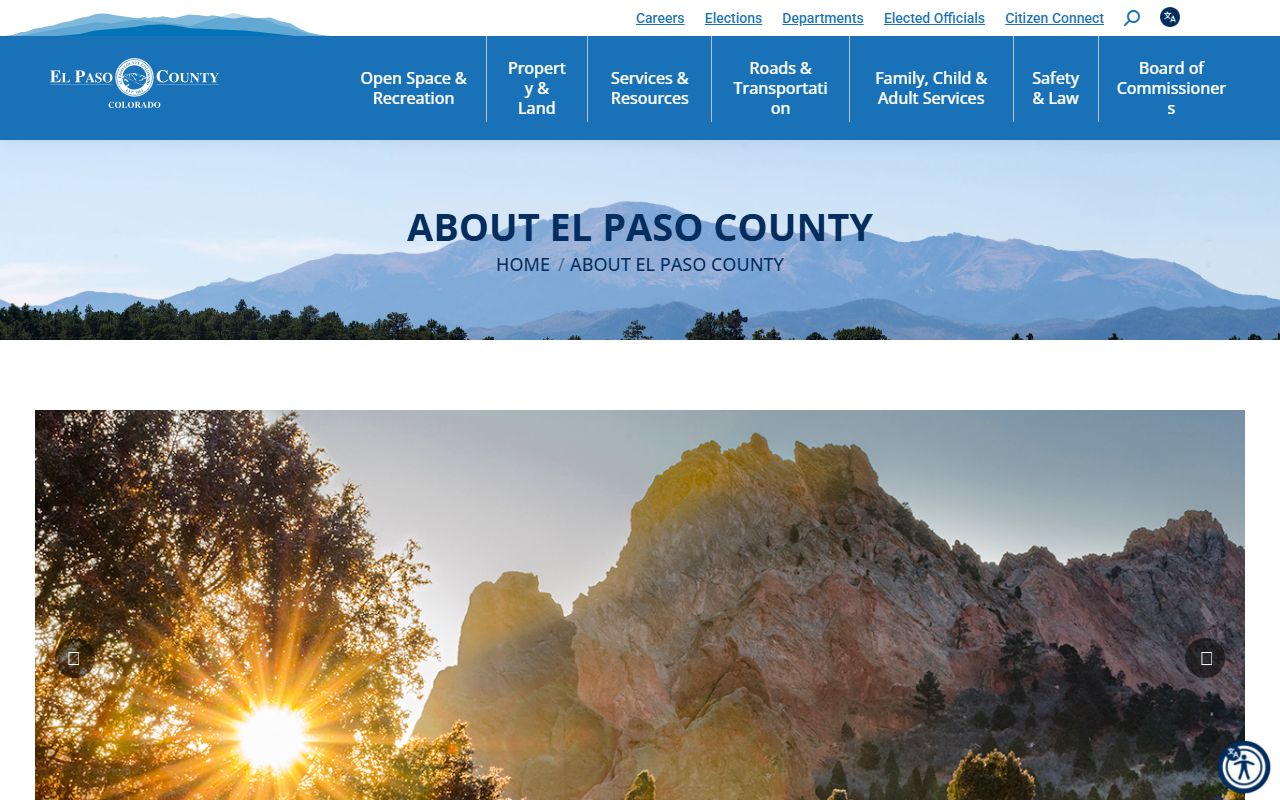
El Paso County covers more than 2,130 square miles and includes Colorado Springs, Manitou Springs, Fountain, Monument, and a handful of smaller towns. The Judicial Building sits in downtown Colorado Springs near Tejon Street and Vermijo Avenue.
Frequently Asked Questions
How do I search El Paso County court dockets?
Use the Colorado Judicial Branch Docket Search prefiltered to El Paso County. Add at least one filter beyond date, like a party name, a case number, an attorney, a court type, or a division. The form warns that broad date-only searches will not run, and that result sets over 5,000 must be refined. The search returns court events; it does not return PDFs of orders or decrees.
Can I download court documents from the state site?
No. The Access Guide and the El Paso County landing page both say trial court documents and files are not directly available through the Judicial Branch website. To get copies, submit the online Record/Document Request Form, email the El Paso PDF form to 04ResearchRequest@judicial.state.co.us, or visit Room S101 at 270 S Tejon St. Fees may apply for copies, certification, name searches, and research time.
How do I request a divorce decree from El Paso County?
Use the online record/document request form. Choose Family Matters and Divorce Decree. Add the case number if you have it, the filing year, El Paso County, the date of birth if known, and the party names. Check the certified copy box if you need a certified version. Pay only after you receive a Notice of Fees, by check, certified funds, or credit card by phone with the assigned researcher.
Who handles marriage records?
The El Paso County Clerk & Recorder Recording Department, not the courts, issues marriage and civil union licenses and records the returned licenses. The fee is $30, cash or card. Divorces are court records and live with the 4th Judicial District. The marriage and divorce page covers the full process, including the absentee affidavit and the 35-day window to use the license.
How do I find someone in the El Paso County Jail?
Search the EPSO inmate tool by Last Name or Booking Number, then call the booking desk at 719-390-2151 to confirm before you act. EPSO warns that mobile results may be inaccurate. The public results include booking number, name, year of birth, charges, court dates, bond information, holds, and warrants. The full El Paso County inmate records page walks through every field.
Are juvenile records public?
Mostly no. Colorado Title 19 restricts juvenile probation and law enforcement records. The online court request form lists Juvenile as a case type, but access is limited to parties, attorneys, agencies with statutory authority, law enforcement, and people with a court order. Juvenile expungement under Title 19 is broader than adult sealing. Always ask the clerk before assuming a juvenile case is public.
Can sealed records be searched?
Sealed adult convictions drop out of public docket results, but courts, prosecutors, and agencies that run statutory background checks can still see them. The Colorado Judicial sealed-case search at coloradojudicial.gov/sealed-case is for defendants confirming their own automatic sealing. It is not a general name search.
Where do jurors park?
Jurors get free validation only at the county parking structures at 50 E Costilla St and 255 Sahwatch St, and only when they check in for jury service. The court tells jurors to place the pink shaded portion of the summons on the dashboard. Reserved spaces are off limits. The 50 E Costilla structure is the listed best option for jurors with accessibility needs.
More answers live on the El Paso County Court Records FAQ page.